Volunteer Board Opening: Make a Difference for Farmland

Volunteer Board Opening: Make a Difference for Farmland

Land Development Regulation Commission 

The Land Development Regulation Commission (LDRC) is the commission that has the most impact on how Marion County grows. The LDRC makes recommendations in regards to the adoption and amendment of the Land Development Code and the Zoning Code.

Opening:

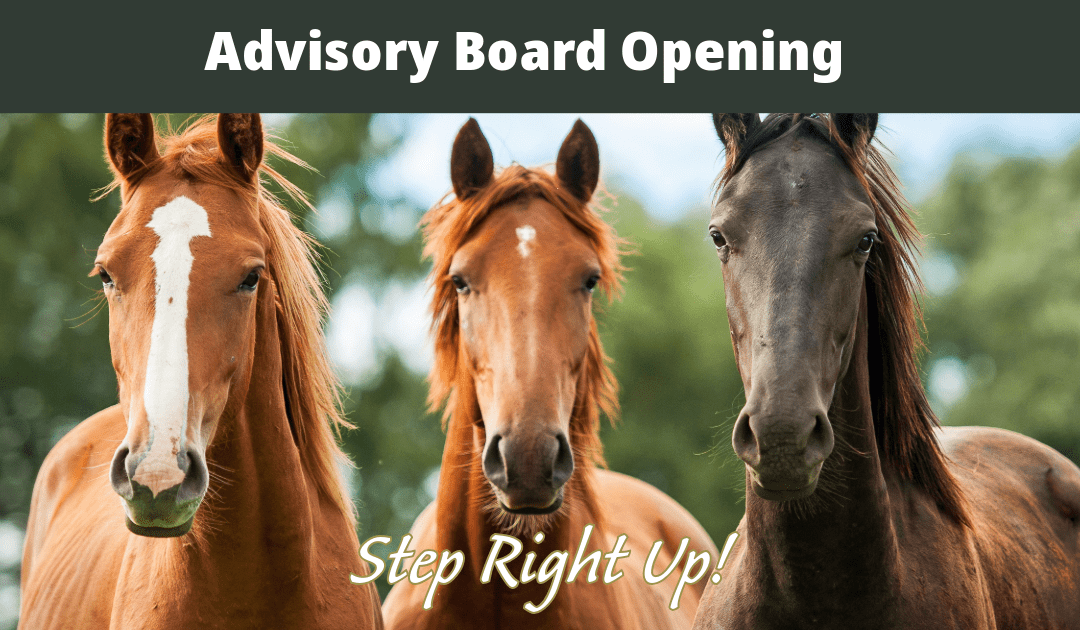
If you have expertise in planning, environmental science, agriculture, or the development industry, then the Land Development Regulation Commission (LDRC) is for you!

The LDRC’s role in shaping future growth is even more important now, as the County is updating its policies in the Comprehensive Plan through the Evaluation and Appraisal Report (EAR). The Comprehensive Plan is like a road map for the community and it will guide where and how Marion County grows over the next 20 years.

If you meet the qualifications and are willing to volunteer your time, then we encourage you to apply. If you have previously applied and were not selected, your previous application to the LDRC will stay active for one year from the date that it was submitted. If a previous applicant wants to be considered for the current LDRC vacancy, they must send an email to CommissionAdmin@MarionFL.org stating that they would like their previous application to be considered.

HOW TO APPLY:

Land Development Regulation Commission (1) Full Member – Full Term 11/2028

Responsibilities: Members shall be qualified electors in Marion County, preferably knowledgeable in the areas of planning, environmental science, agriculture, and the development industry, as well as in technical fields related to land development regulations. They should have the ability to evaluate and recommend specific regulatory standards and criteria to the County Commission regarding the adoption and amendment of the Land Development Code and Zoning Code. Additionally, members are responsible for preparing an annual report recommending amendments to the Land Development Code or Zoning Code.

The members of the LDRC are appointed by the Board of County Commissioners. To be eligible, you must be a qualified voter and resident of Marion County. This is a volunteer position.

Applications for said vacancies may be obtained at the Marion County Board of County Commissioners’ Office located at 601 S.E. 25th Ave., Ocala, Florida; or by calling 352-438-2323.

To apply, download this form:
Duties:

  1. To review and consider all proposed land development regulations and amendments thereto.
  2. To hold public hearings regarding proposed land development regulations and amendments thereto.
  3. To make recommendations to the county commission regarding consistency of proposed land development regulations or amendments with the county’s approved and adopted comprehensive plan.
  4. To review and make recommendations to the county commission regarding the adoption and amendments to the Land Development Code.
  5. To monitor and oversee the effectiveness and status of the Land Development Code and recommend to the county commission such changes in the code as may be required.
  6. To make its special knowledge and expertise available, upon reasonable written request and authorization of the county commission to any official, department, board, commission or agency of the county, state or federal governments.


Previous applications to the LDRC stay active for one year from the date that they were submitted. If a previous applicant wants to be considered for the current LDRC vacancy, they must send an email to CommissionAdmin@MarionFL.org stating that they would like their previous application to be considered.

The deadline for receiving applications is Friday, November 1, 2024 at 4 p.m.  The Marion County Board of County Commissioners plans to appoint members on Tuesday, November 19, 2024 or as soon thereafter as possible.
Contact the County about the EAR:

For any additional questions regarding the EAR process, please email Planning@MarionFL.org with your subject line including 'EAR' or call us at 352-438-2675 & ask for a planner.

https://www.marionfl.org/agencies-departments/departments-facilities-offices/growth-services/planning-zoning/ear

The workshops will be livestreamed. Check the County’s agenda webpage for the link: https://marionfl.legistar.com/Calendar.aspx
Watchdog Alert! RaceTrac Plans Farmland Preservation Area Invasion

Watchdog Alert! RaceTrac Plans Farmland Preservation Area Invasion

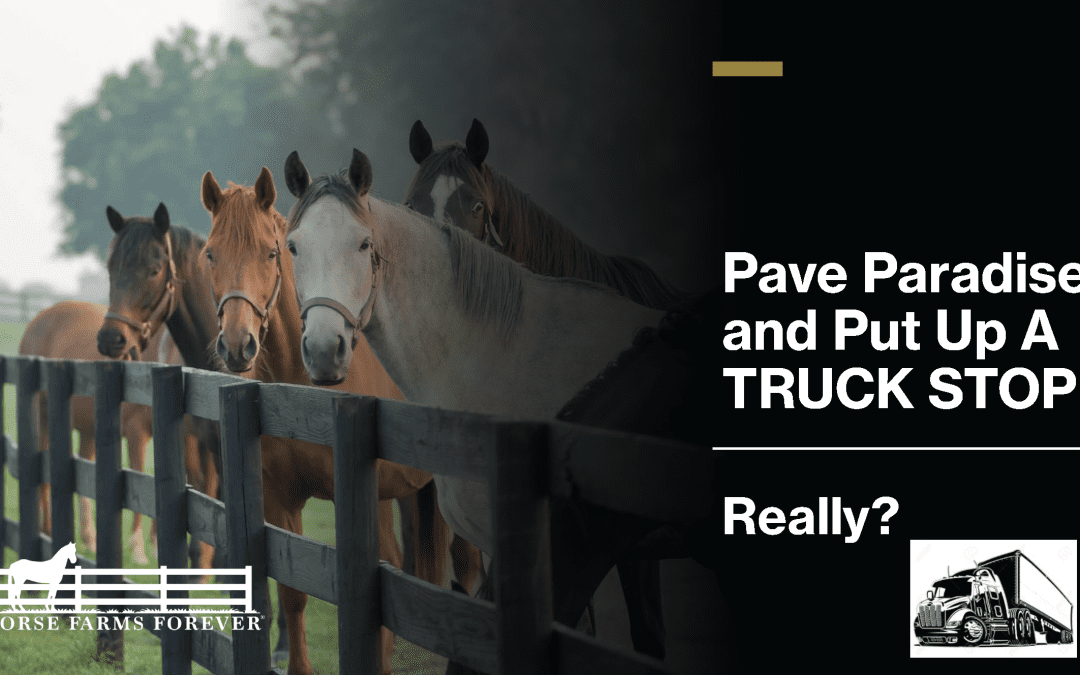
RaceTrac has targeted land and begun discussions with the County to build a truck stop in the Farmland Preservation Area. RaceTrac is a great family business story, and their facilities are first class.  There’s nothing wrong with them or what they want to build.

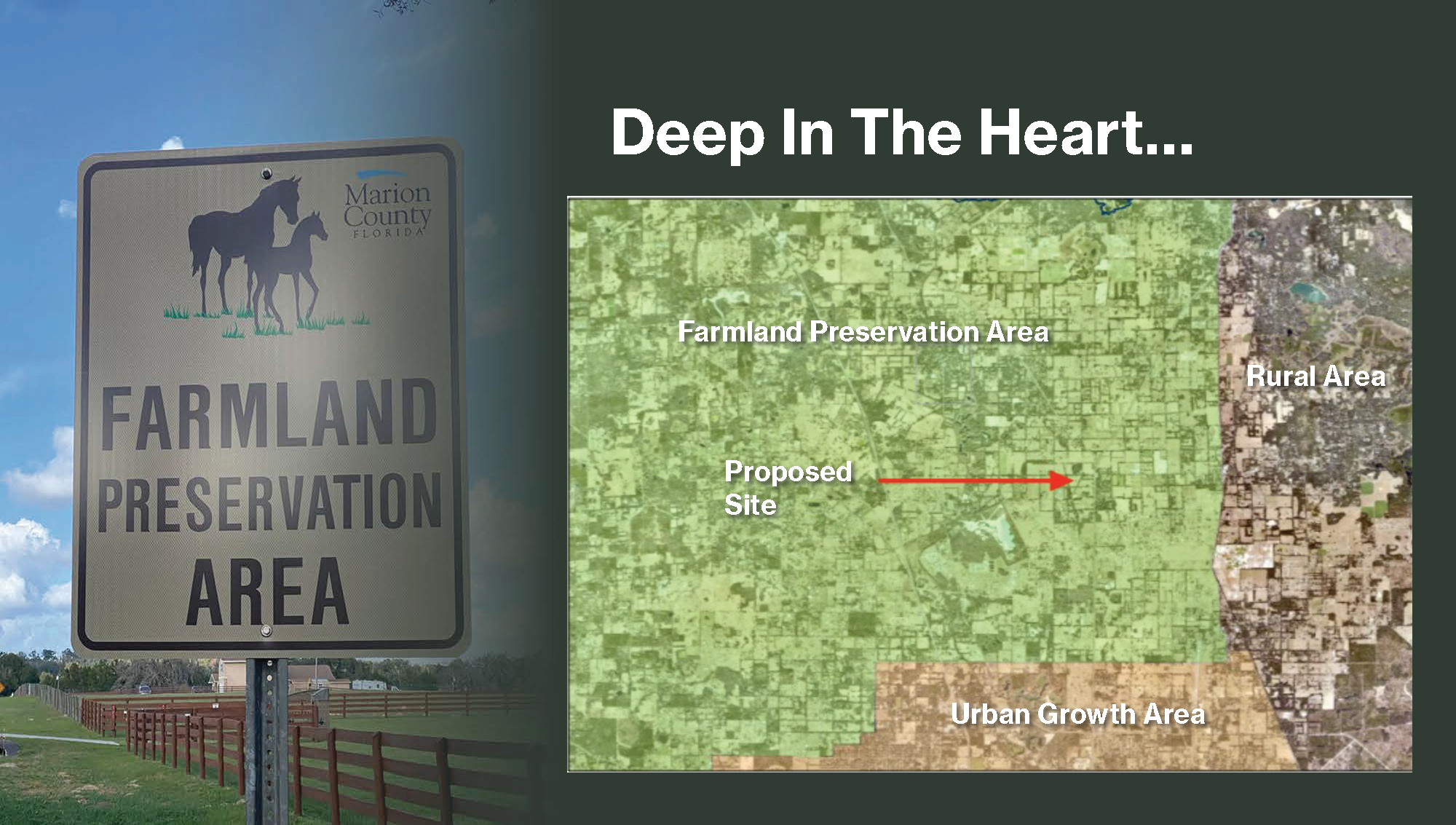
What’s wrong is where they want to build it, deep inside the Farmland Preservation Area on rural land with agricultural zoning. It’s just not a compatible land use.

Wrong Location

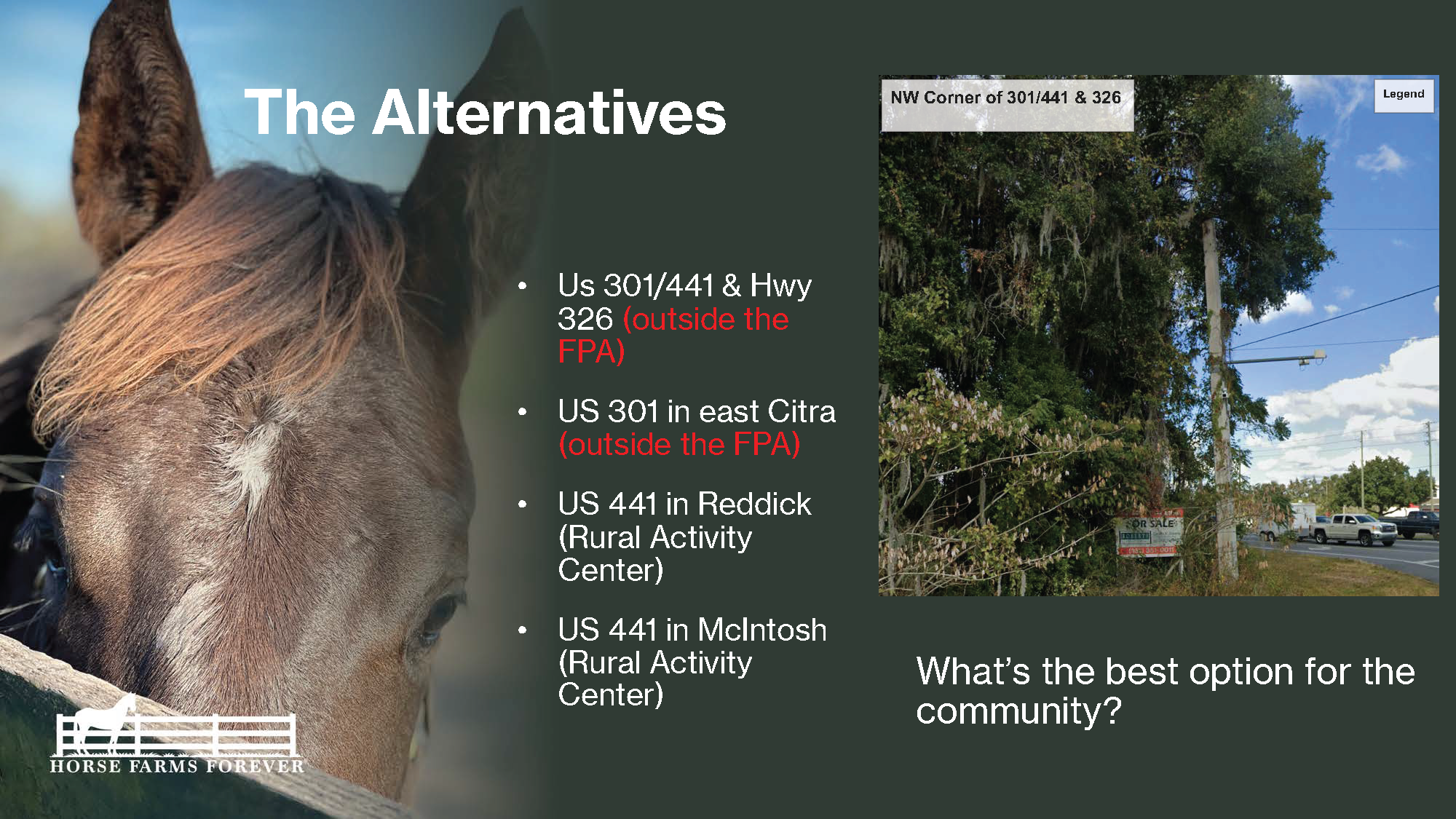
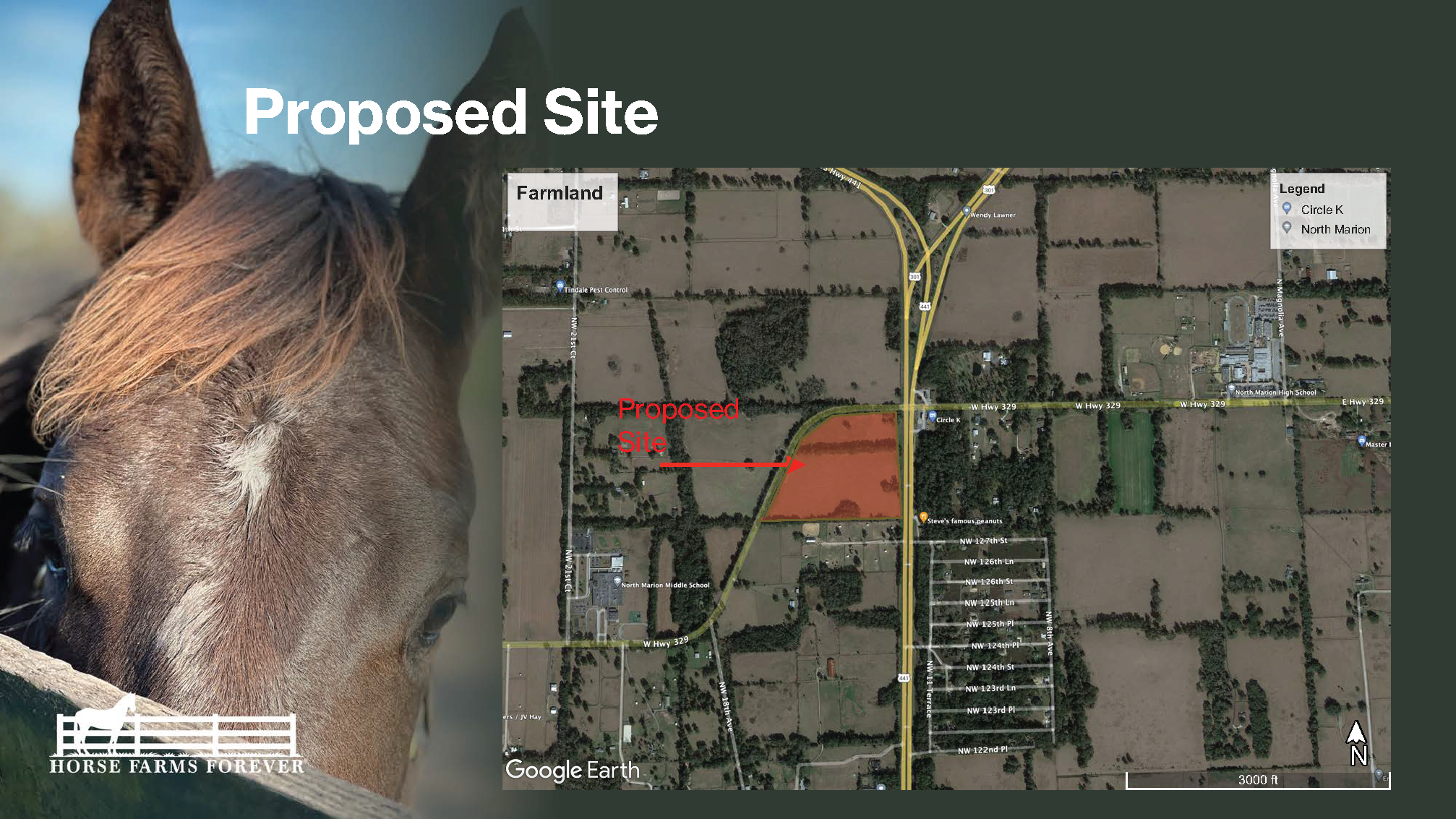
The site is at the intersection of 329 where it meets 301/441 just before the “Y” where 301/441 split in northwest Ocala. It is right near both the North Marion High and Middle schools. You can see that the area is predominantly large, open pastures.

Incompatible Zoning

In order to approve this use, the County would have to:

  • Amend the Comprehensive Plan to change the Future Land Use from Rural to Commercial.

  • Change the zoning from Agricultural to Business.

  • Contradict the unanimously passed HFF Amendment.

Sprawl-Inducing

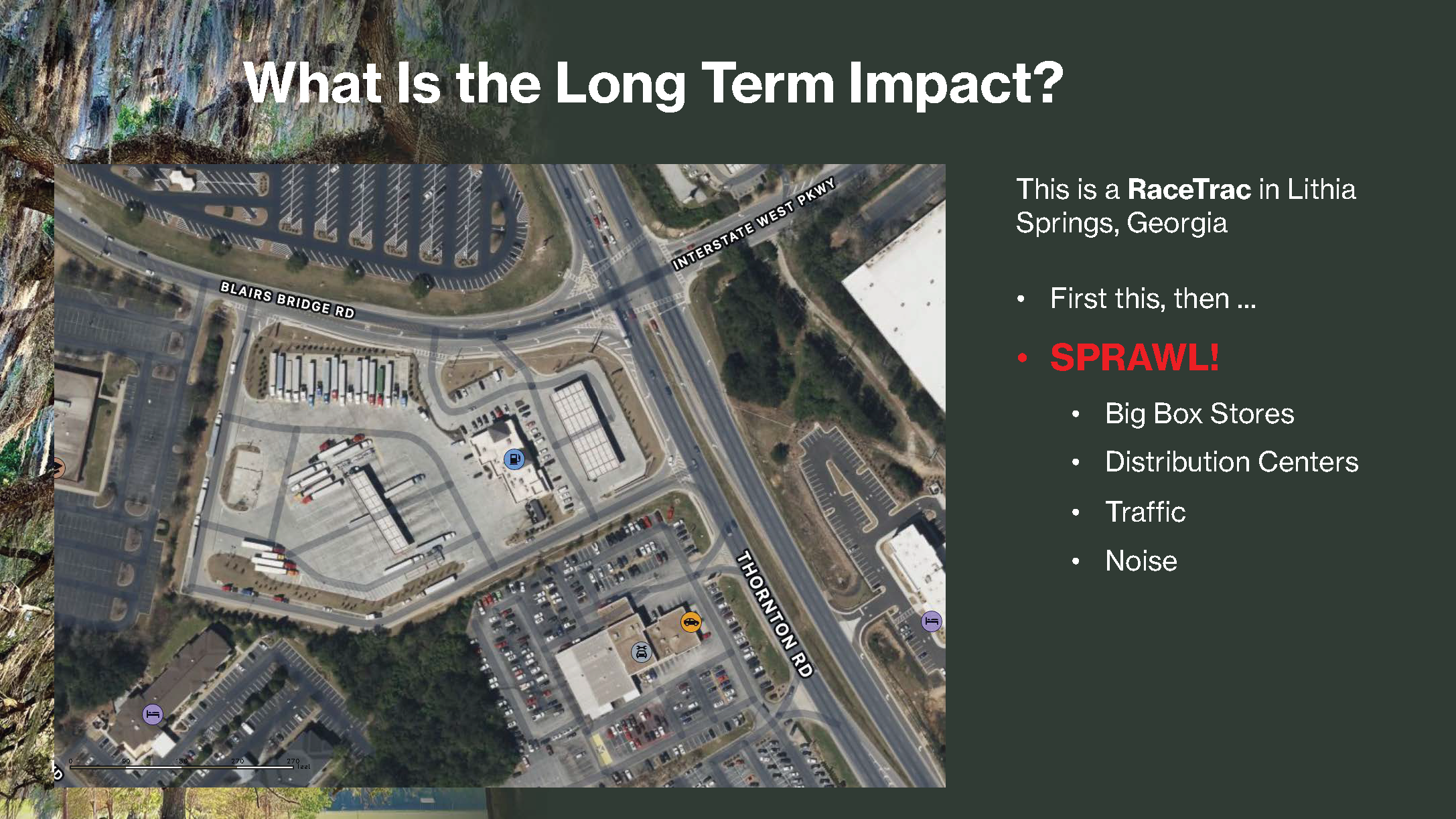
Truck stops depend on traffic to make a profit. Look at what grew up around a similar RaceTrac in Lithia Springs, Georgia:

  • SPRAWL!
  • Big Box Stores
  • Distribution Centers

Better Alternatives Exist

Locations with compatible zoning are plentiful

This is Horse Country

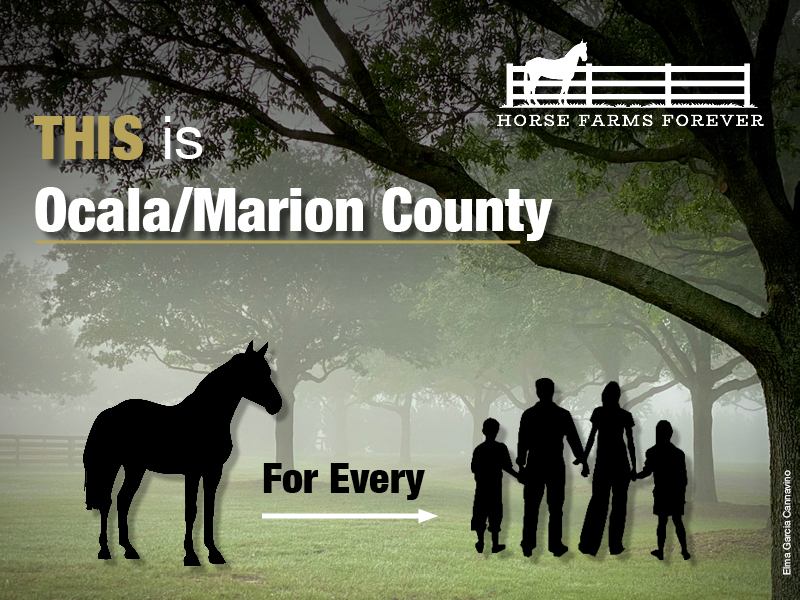
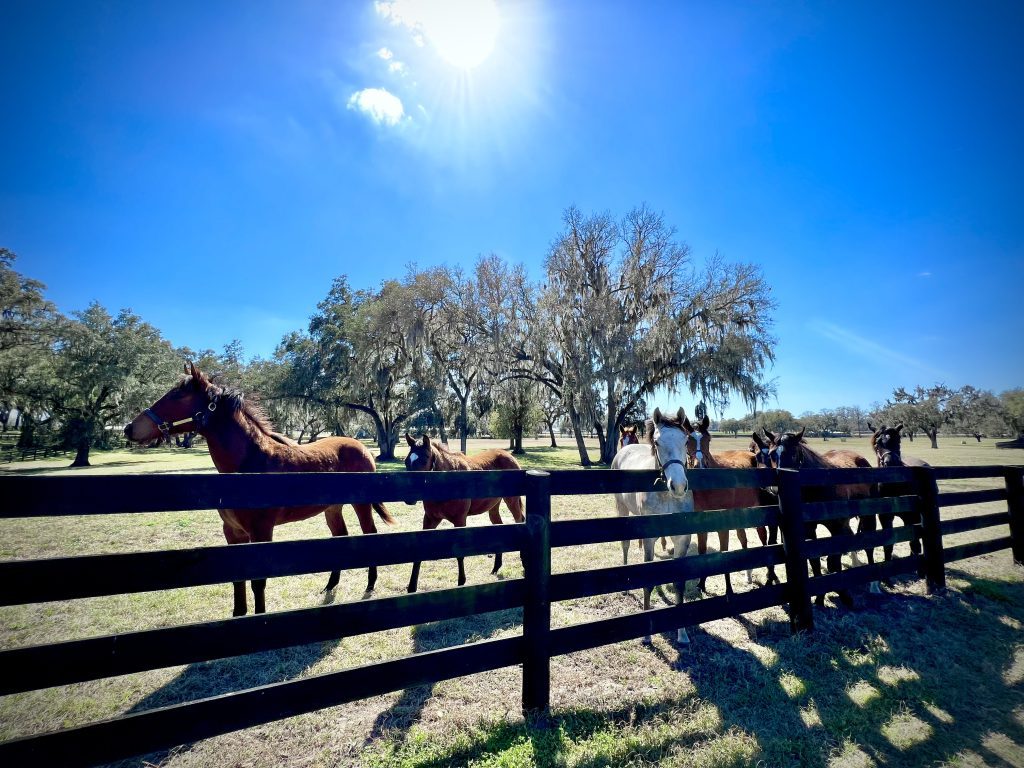
Ocala is the Horse Capital of the World®. There is one horse for every four people. The equine industry accounts for one-fifth of the county’s workforce, land use and economy. For Ocala, the equine industry is the bedrock of our economic strength, infrastructure, and identity; it’s like vineyards are to Napa Valley, like corn is to Iowa.

Respect and Protect 

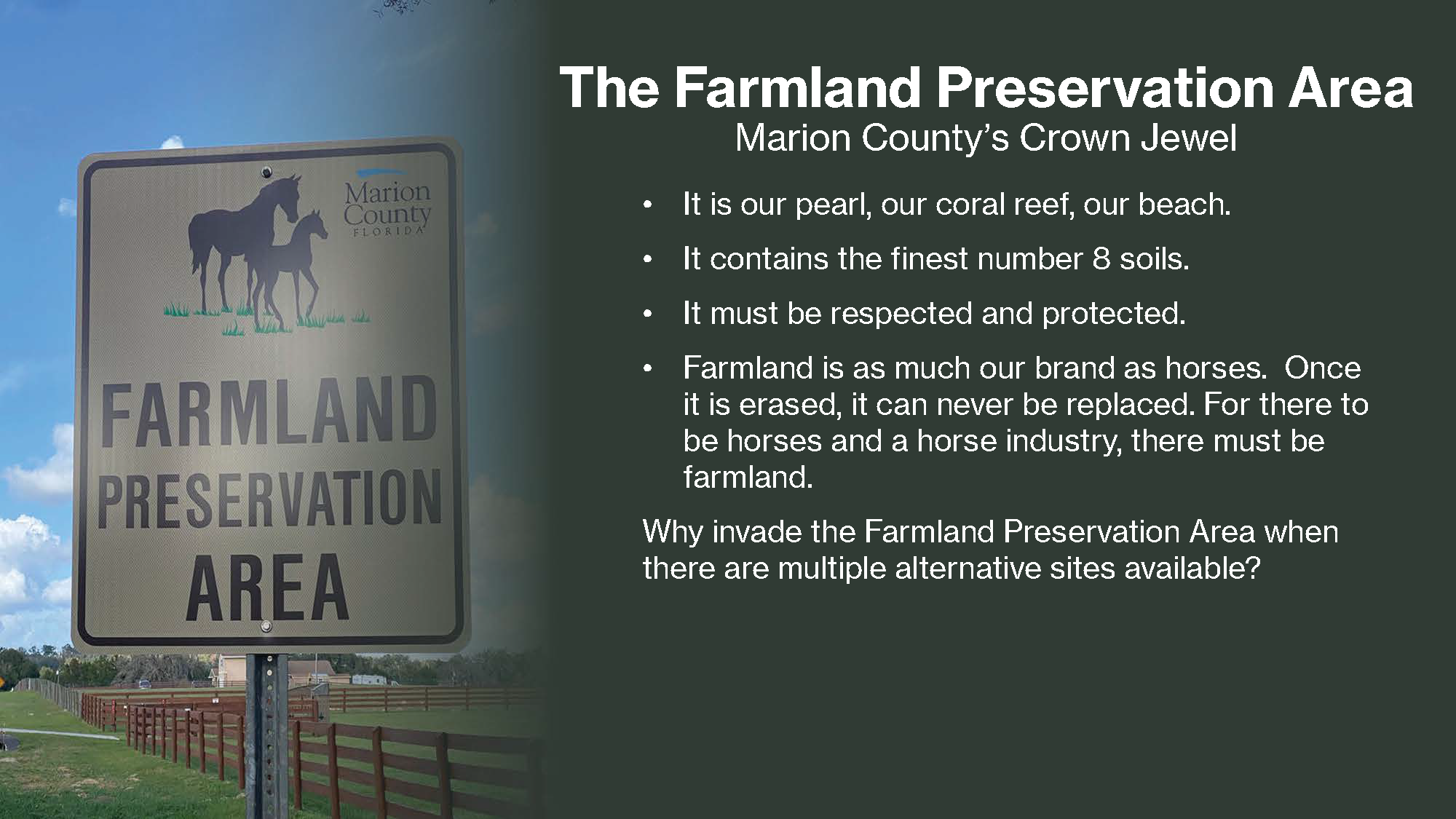
The foundation for this equestrian mecca is the simple fact that for there to be horses, there must be horse farms. Ocala is home to thousands of horse farms and training centers, mostly concentrated in the Farmland Preservation Area. What makes the Farmland Preservation Area so special and worthy of protection?  Why was it established and what makes it unique?

Valuable Natural Resources

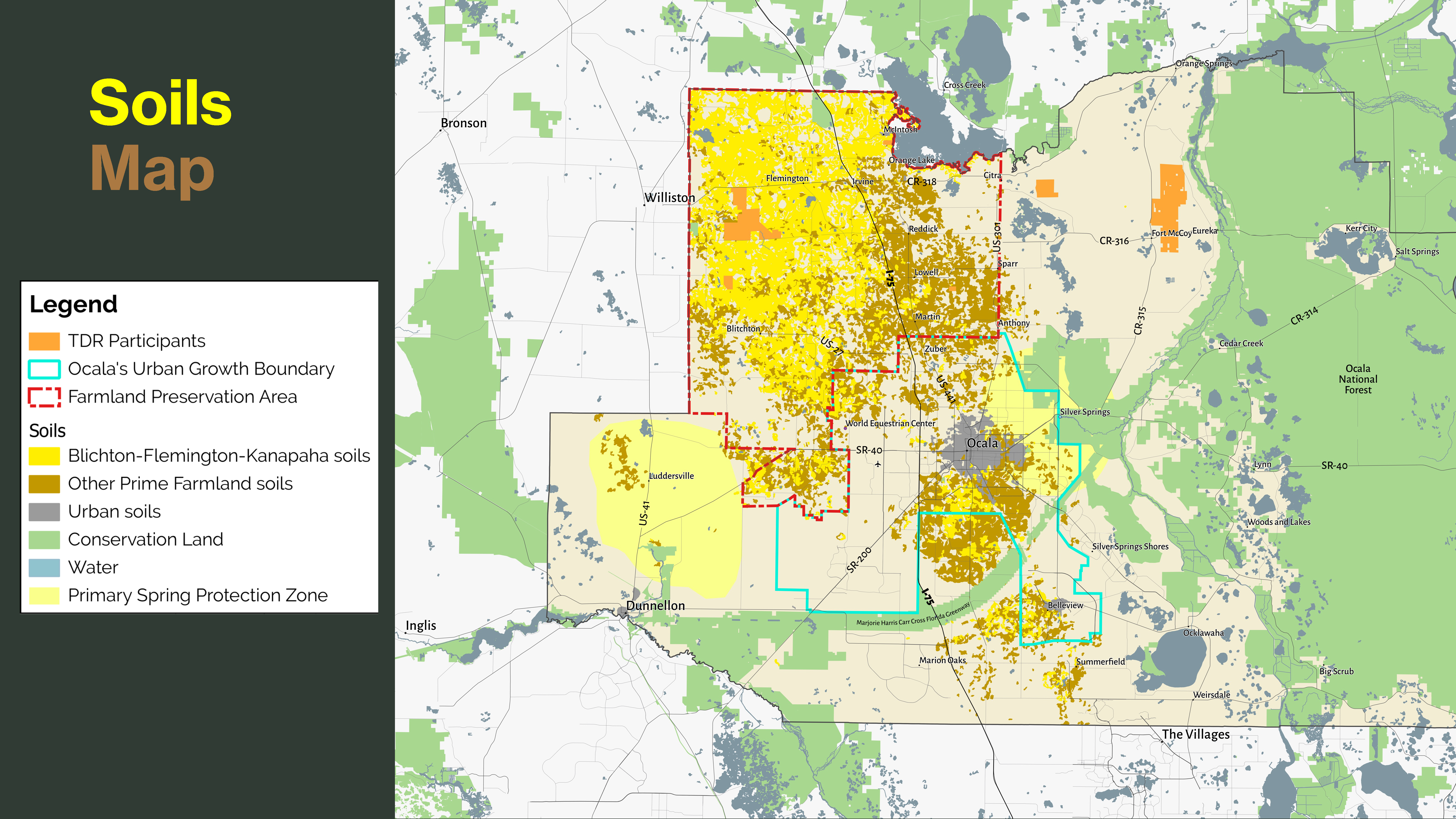
The answer is simple, it’s the soil and the water. The boundaries of the Farmland Preservation Area were drawn around one of the richest concentrations of number 8 soil in the country. Number 8 soil is special because it is a thin layer of nutrient rich dirt sitting atop a massive lime rock formation known as the Ocala Ridge. This almost pure limestone is full of calcium carbonate, a key ingredient in building strong bones and muscles in horses.  

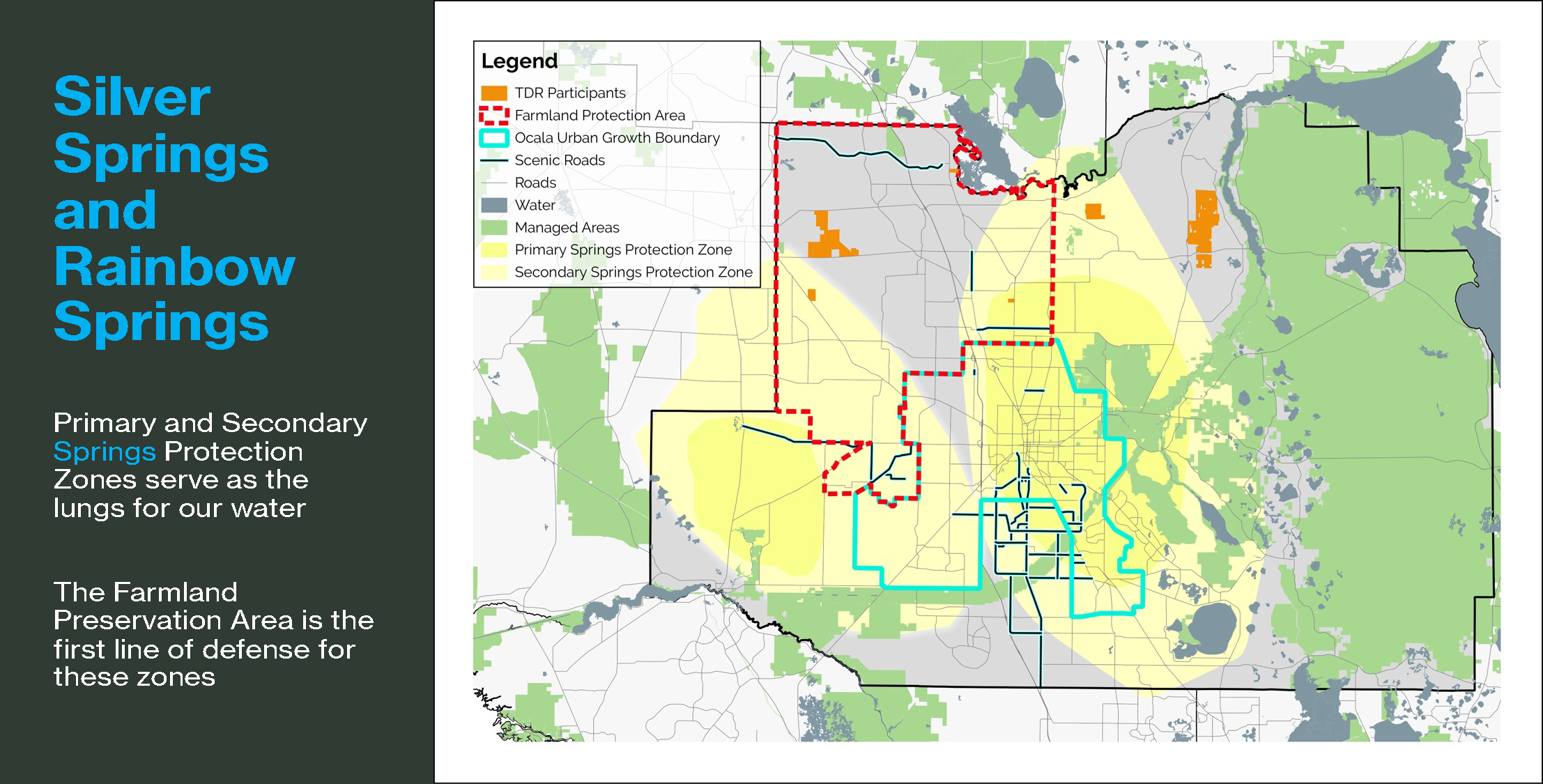
Silver Springs is the largest artesian spring in the world. The Farmland Preservation Area cradles both the primary and secondary protection zones for Silver Springs and Rainbow Springs within its boundaries.

The People Have Spoken

The majority of the community agrees.  We support that statement with the results of the Quality-of-Life Survey in 2021.  The community spoke loudly when asked, “What do you think is the most important issue facing Marion County today?”

The number one answer was Preservation of Land and Natural Resources.

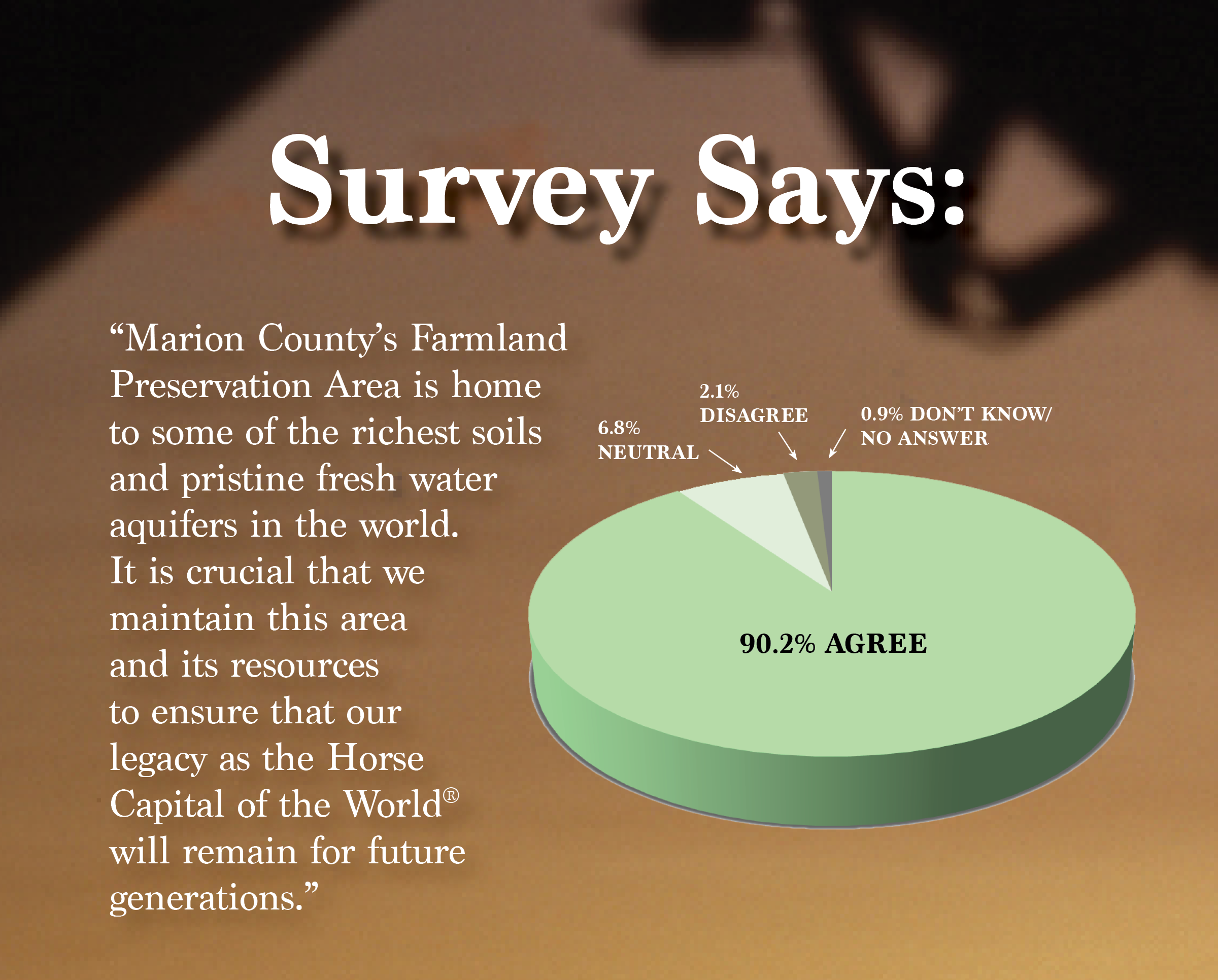
When asked, “Is it crucial to maintain the Marion County area and its resources to ensure that the legacy as the Horse Capital of the World™ will remain for future generations?”

90% agreed, the highest score on the survey.

The County Agrees

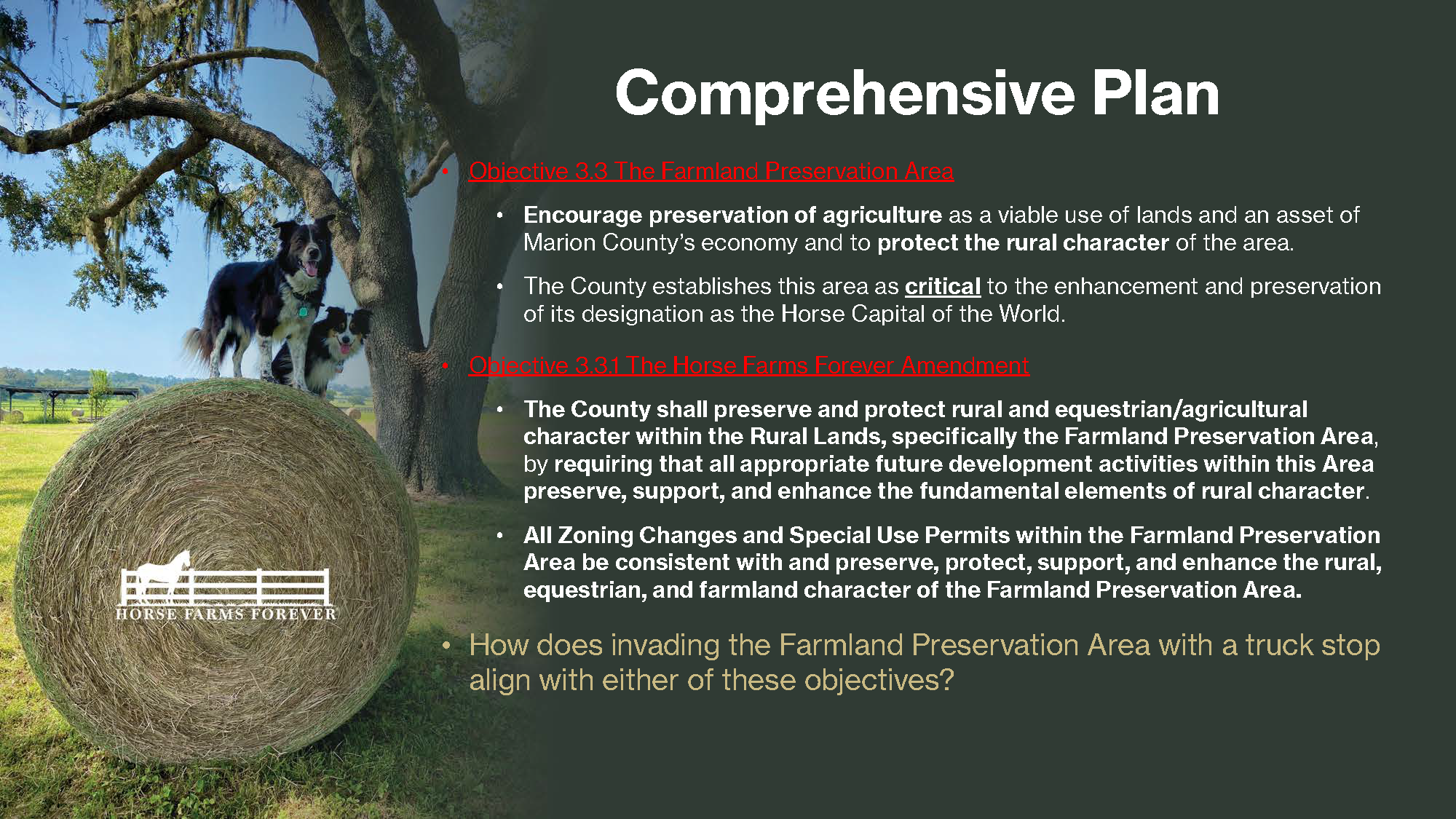
In addition, the majority of the commissioners agree.  We support that statement with the unanimous passage of the Horse Farms Forever Amendment in 2022.

Policy 3.3.1: Elements of Rural Character

The County shall preserve and protect rural and equestrian/agricultural character within the Rural Lands, specifically the Farmland Preservation Area, by requiring that all appropriate future development activities within this Area preserve, support, and enhance the fundamental elements of rural character set forth below, and further requiring that all Zoning Changes and Special Use Permits within the Farmland Preservation Area be consistent with and preserve, protect, support, and enhance the rural, equestrian, and farmland character of the Farmland Preservation Area.

We ask RaceTrac to recognize the role that horses, horse farms and the Farmland Preservation Area play in the character and culture of this community, and to respect the integrity of the rural land in the Farmland Preservation Area.

Contact the County about the EAR:

For any additional questions regarding the EAR process, please email Planning@MarionFL.org with your subject line including 'EAR' or call us at 352-438-2675 & ask for a planner.

https://www.marionfl.org/agencies-departments/departments-facilities-offices/growth-services/planning-zoning/ear

The workshops will be livestreamed. Check the County’s agenda webpage for the link: https://marionfl.legistar.com/Calendar.aspx
United Voices Support the Farmland Preservation Area

United Voices Support the Farmland Preservation Area

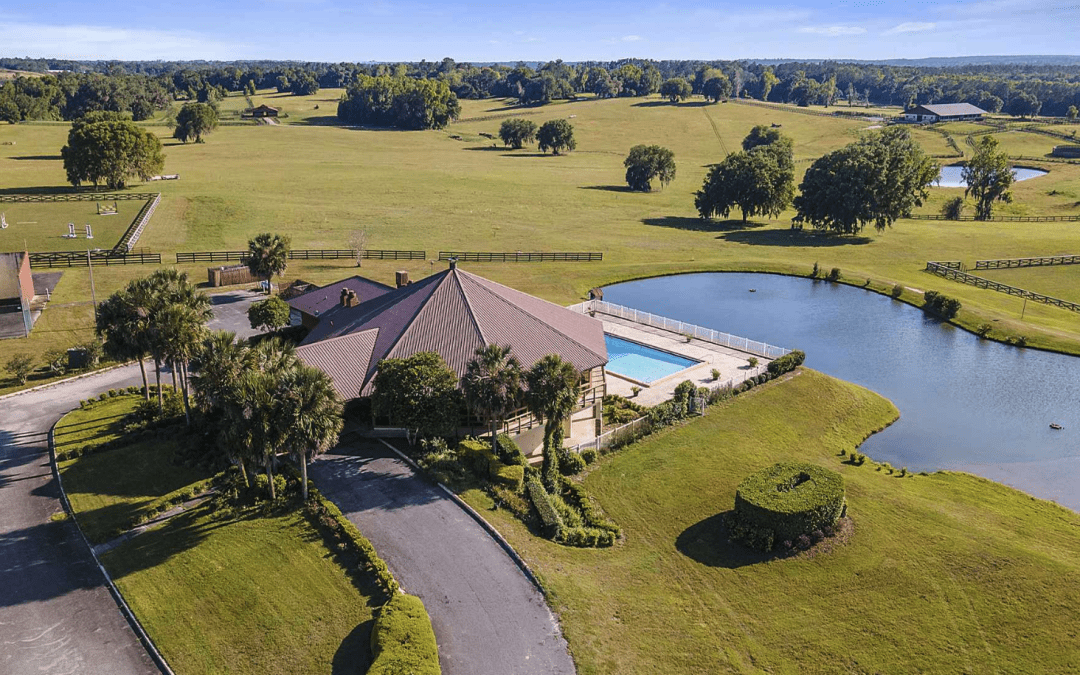
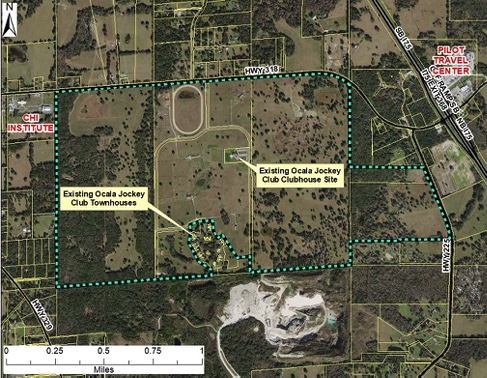
Aerial view of the 10,125 square foot existing clubhouse at Ocala Jockey Club, which sits on the second highest elevation in Florida and features expansive views and spectacular sunsets. Photo: Sotheby’s

On June 21, the Marion County Commission approved Golden Ocala Equestrian Land’s (GOEL) plans for the World Equestrian Center Jockey Club (WEC-JC). Not everyone agrees with their decision, but important and passionate opinions emerged from the community-wide conversation about this matter: the Farmland Preservation Area is a top priority and one of the reasons why many people have chosen Marion County as their home.

While the Commission’s final vote was 3-2 in favor of GOEL’s plans for WEC-JC, their support of the Farmland Preservation Area (FPA) was unanimous. With that said, there were different opinions as to what protecting the Farmland Preservation Area means, especially when it comes to compatible and non-compatible uses. Over the past four years, Horse Farms Forever (HFF) has been focused on our mission to inspire the conservation of horse farms through education, awareness and idea exchange so as to preserve natural pasture land focusing on horses and their habitats.

We believe that the continuation of the Ocala Jockey Club (OJC) as an equestrian event facility under the stewardship of the Roberts family will do more to protect horse farms in that region of the FPA because it is the right type of development to help keep horse farms, as horse farms. And for the most part, the WEC-JC plans aligned with the current use of the property and the former owner’s plans for the property, which included a boutique hotel, retail village, and upscale residential development. The continued use of clustered home sites allows almost half of the WEC-JC property to be reserved for equestrian activities.

You can read our position statement about the plans for WEC-JC here.

You may or may not agree with our position or the Commission’s vote, but of the two most likely current scenarios for the property detailed below, which one does more to protect horse farms in northwest Marion County?

  • Subdividing the entire 1,029 acres into a 10-acre lots?
    • The spectacular view and open spaces would be gone.
    • The 520-acre equestrian event facility and 4-star cross-country course would be gone.
    • The risk of Family Divisions could potentially triple the number of lots.
    • Hundreds of individual wells and septic systems.
  • Clustering 94 lots of 3-acres or more on 420 acres?
    • A higher density of residential areas allows for large, open common areas for equestrian uses.
    • Water and wastewater treatment facility to protect water quality.
    • The 520 acres for open space and the renovation of an existing equestrian event facility.
    • Developing 89 acres to allow for the continued use of the existing clubhouse, adding a RV park and 9 arenas and grand stands for equestrian events (with 9,000 seats total), commercial/retail space, and polo fields.

And there is a third potential future scenario that is most alarming. When a 1,000-acre parcel of open pasture right next to an interstate exit, 20 minutes south of one of the premier universities in the country, and directly next door to Regional Activity Center and designated Commerce/Employment overlay zones is up for sale, our biggest fear is that it will be targeted for commercial development.

If a high-profile company like Microsoft or Apple had partnered with the University of Florida to propose a technology complex there, the economic pressure on the commissioners from the state and the community could have been overwhelming. Especially as we face another potential economic recession.

Population Growth and Supporting the Equine Industry

Our position took into consideration the exponential population growth in Marion County, which is predicted to increase over the next 20 years with 150,000 new residents. This growth will create tremendous pressure on landowners in the FPA to subdivide horse farms and farmland into smaller and smaller parcels. How do horse farm owners resist the pressure to subdivide their land or sell to a developer? Their businesses depend on showcasing the horses they breed, raise, and train at equestrian event facilities.

What would Marion County be without H.I.T.S. and Live Oak International (both located in the FPA), and the World Equestrian Center, Ocala Breeders Sales Arena, the S.E. Livestock Pavilion, the Florida Horse Park, Majestic Oaks, Barnstaple South, and numerous other horse show facilities on private farms, many in the FPA. Now the WEC-JC will be added to this impressive list of facilities and help serve and sustain the growing equine industry in Marion County.

Setting a Precedent

Opening the door to future commercial development in the FPA is a concern shared by HFF, but the majority of the proposed improvements on the WEC-JC property will be to support equestrian events – horse barns, riding arenas, maintenance barns, and restoring the existing cross-country course. The RV parking and multiple arenas and grand stands, plus the addition of commercial space will support the economic viability of the equestrian events. Also, with the WEC-Rural Land Use (see page 4 of the document), this effectively limits the use of the property to equestrian uses only, so the facility cannot be used for rock concerts.

In addition, any future landowner would have to submit an application to change the Land Use to WEC Rural and an application for a Comprehensive Plan Text Amendment to use the WEC Rural Land Use designation for that specific location. Both the Planning & Zoning Commission and the County Commission would evaluate both applications as presented.

The amount and type of commercial uses are consistent with large equestrian event facilities. For example, the Kentucky Horse Park (KHP) covers 1,229 acres and provides space for several tourist attractions and museums, competition facilities, a 5-star cross-country course, 260 RV spaces with a general store and recreational facilities, and office space for more than 30 national and regional equine organizations. KHP also has a 7,400 seat-arena, (Rolex Stadium, main grandstand.)

Let’s look at some of the other issues brought forth, such as the 10-acre lot size requirement for the FPA, the recently adopted HFF Comprehensive Plan Text Amendment, and the existing B-2 Zoning at WEC-JC:

Ten-acre Lots in the Farmland Preservation Area

In the Farmland Preservation Area (FPA), the minimum lot size is 10 acres. While Horse Farms Forever strongly favors maintaining 10-acre or larger parcels within the FPA, there are numerous areas within the FPA where smaller lots exist. For example, there are over 1,000 existing 3-acre lots in the area surrounding the OJC property.

While 10-acre lots are required in the FPA, unless the property is located in a Rural Activity Center (RAC), which allows up to two dwelling units per acre, there is a waiver process in Marion County’s Land Development Code that allows for a Family Division. For example, this waiver enables landowners to divide a single 10-acre lot into 3 smaller lots for the use of immediate family members as their primary residence.

With the Family Division waiver available for landowners, if 10-acre lots were platted on the OJC property, a single 10-acre lot could potentially be further divided into a 4-acre lot, a 3-acre lot and a 3-acre lot, thereby tripling the number of homes. In contrast, the 94 three-acre lots proposed by WEC-JC cannot be further divided, thus ensuring the number of homesites will never be more than 94 lots. In addition, the proposed lots are required to have central water and sewer, which helps protect water quality and spring sheds.

The 94 lots proposed at WEC-JC are consistent with the density allowed on the 1,029-acre property, but instead of being spread out over the entire landscape, they are clustered on 420 acres. This leaves about 520 acres for open space and an equestrian event facility. The OJC property already has 34 existing clustered townhouses, so there is consistency in this planning.

Horse Farms Forever® Comprehensive Plan Text Amendment

The Horse Farms Forever® Amendment, which requires that all Zoning Requests and Special Use Permits be consistent with the goals of the Farmland Preservation Area, became effective on April 30, 2022. The WEC-JC application was submitted before the HFF Amendment became effective, therefore, while all future applications will have to meet this standard, it does not apply to the WEC-JC application.

Nine Arenas with 9,000 Seats TOTAL

The WEC-JC application includes a Development Uses chart with the proposed uses. See page 5 here. There are 9,000 Seats for the: Arena & Event Facilities at WEC with accessory concessionary uses (snack bars, limited retail, etc.) The 9,000 seats will be dispersed at 9 different arenas and several event facilities, and with the WEC Rural Land Use category, the use is limited to equestrian events only. See page 4 and 5 here for the list of proposed arenas at WEC-JC and here for a list of existing arenas at WEC Ocala.

Existing B-2 Zoning at the Jockey Club

It’s important to remember that the WEC-JC has a designated zoning that gives the owner the right to use those property rights. On the WEC-JC property, there is a pre-existing commercial site of 5.84 acres with B-2 Zoning for the clubhouse and surrounding area. B-2 Zoning allows for commercial uses including hotels, nightclubs and RV rentals.

Process and Next Steps

GOEL will submit a Master Plan for approval by the County Commission and a Developer’s Agreement for the water and wastewater treatment plant and the roadway improvements within 6 months. GOEL is responsible for their proportionate share of the roadway improvements.

As part of the state’s review of the WEC-JC application, while there were no objections, several state agencies provided comments and made recommendations including the Division of Historical Resources and the Florida Fish and Wildlife Conservation Commission. Any potential historic resources or endangered wildlife will be addressed by each respective agency. Also, the addition of a water and the wastewater treatment plant will help protect water quality.

What Makes This Slice of the Farmland Preservation Area Unique?

What makes the OJC’s location in the Farmland Preservation Area unique is threefold:

  1. It is already approved as an equestrian event facility, which includes almost 6 acres zoned B-2 for commercial use and 34 townhouses on clustered residential lots.
  2. It is bordered on 3 sides by existing commercial uses: a teaching veterinary college with dormitory, an active lime rock mine and a 400-lot recreational vehicle park.
  3. It is bordered on the east by overlay zones including a Regional Activity Center and two Future Land Use designations of Employment Center and Commerce District, all slated for high density commercial development.

The 453-acre Irvine/Sunny Oaks Regional Activity Center (RGAC) is adjacent to the Highway 318 interchange on I-75. This interchange includes a Future Land Use Element designation in the Comprehensive Plan that includes an Employment Center, a Commerce District and a Regional Activity Center (RGAC). While this parcel is within the Farmland Preservation Area boundaries, these Future Land Use designations overlay and override the Farmland Preservation Area regulations and restrictions.

As a result of the above designations and classifications, the owner of this I/SO parcel inside the RGAC has a legal right to rezone this parcel from agriculture to an implementing zoning district for the specific Future Land Use designation. This legal right was established in 2012 when the RGAC was created and revised in 2014. While the requested zoning change is to Planned Unit Development, there are other options that would satisfy the legal obligation of the County to rezone the property to an implementing zoning district. Nonetheless, they all allow significant retail, commercial and industrial development.

Regrettably, the fate of the Irvine/Sunny Oaks area was sealed a decade ago by these Future Land Use designations. At that time, Marion County was coming out of a recession and faced with high unemployment.

Finding the Balance

Growth is here in Marion County. With the growth pressures, it’s important to support responsible growth and to find the balance between our urban and rural areas. When there are different opinions on such a divisive issue, a collaborative approach can help find the middle ground and areas that we can agree on, and then, move forward as a community. One of the most significant outcomes of the June 21 meeting is the level of community wide engagement about protecting the Farmland Preservation Area – from the Marion County Commission, to the Ocala Metro Chamber of Economic Partnership, and to environmental groups and landowners.

Every speaker at the June 21 meeting spoke passionately about protecting the FPA. This same strong sentiment was also ranked as the most important issue facing Marion County by over 90 percent of the people who responded, in the recently conducted county-wide Quality of Life Survey, organized by HFF.

Conservation Easements Protect Land from Development

We also hope that landowners who are concerned about future development, will take this opportunity to explore land conservation options to protect their land for future generations. The only way to protect private land from development, in perpetuity, is with a conservation easement. If the previous owners of the OJC had placed a conservation easement on the property, they could have permanently controlled its future development and use.

When a landowner places a conservation easement on their property, they make the decisions about what will happen to their property in the future – not the government or elected officials. We are happy to help facilitate this conversation and provide resources to interested landowners.

In the long term, the community may come to embrace the WEC-JC and see it as positively impacting the FPA and further cementing our brand as Horse Capital of the World®, making Marion County a unique destination unlike any other.


HFF will be holding our Third Annual Conservation Summit this fall on Tuesday, November 22 at the Ocala Breeders’ Sales Arena. The theme will be Transportation. We will release further details as the event nears, and we hope you will mark your calendar and join us as we continue this very important conversation to help protect what we love most about Marion County – the open spaces and beautiful places.

We hope you will join Horse Farms Forever and support our mission.

Contact the County about the EAR:

For any additional questions regarding the EAR process, please email Planning@MarionFL.org with your subject line including 'EAR' or call us at 352-438-2675 & ask for a planner.

https://www.marionfl.org/agencies-departments/departments-facilities-offices/growth-services/planning-zoning/ear

The workshops will be livestreamed. Check the County’s agenda webpage for the link: https://marionfl.legistar.com/Calendar.aspx
The Master Plan For I-75

The Master Plan For I-75

From The Turnpike to CR 234 – The Latest on Fifty Miles of Improvements

There is no doubt that I-75 is near capacity. To accommodate the projected population growth and increased truck traffic, the road’s capacity will have to be expanded.

Over the next 20 years, Marion County’s population will grow by about 150,000 new residents to reach nearly half a million people. In addition, the industrial warehouse space will increase to a total of 17M square feet. About half of the existing 11M square feet of industrial warehouse space is used by five distribution centers and an additional six million square feet of industrial warehouse space will be completed over the next 12 to 18 months.

This exponential growth will stretch the capacity of I-75 to its limits.

I-75’s capacity issues have been on the Florida Department of Transportation’s (FDOT) radar since 2016, with the formation of the I-75 Relief Task Force. The top recommendation from the Task Force was to improve the capacity of I-75. The second recommendation was to improve existing roads such as 41, 441 and 301.

In 2018, the Coastal Connector was proposed by FDOT, but since that was rejected, I-75 became the focus again in 2019. (The Northern Turnpike Extension was proposed by the Florida Turnpike Enterprise (FTE), which is part of FDOT in 2021).

Scope Of The Project

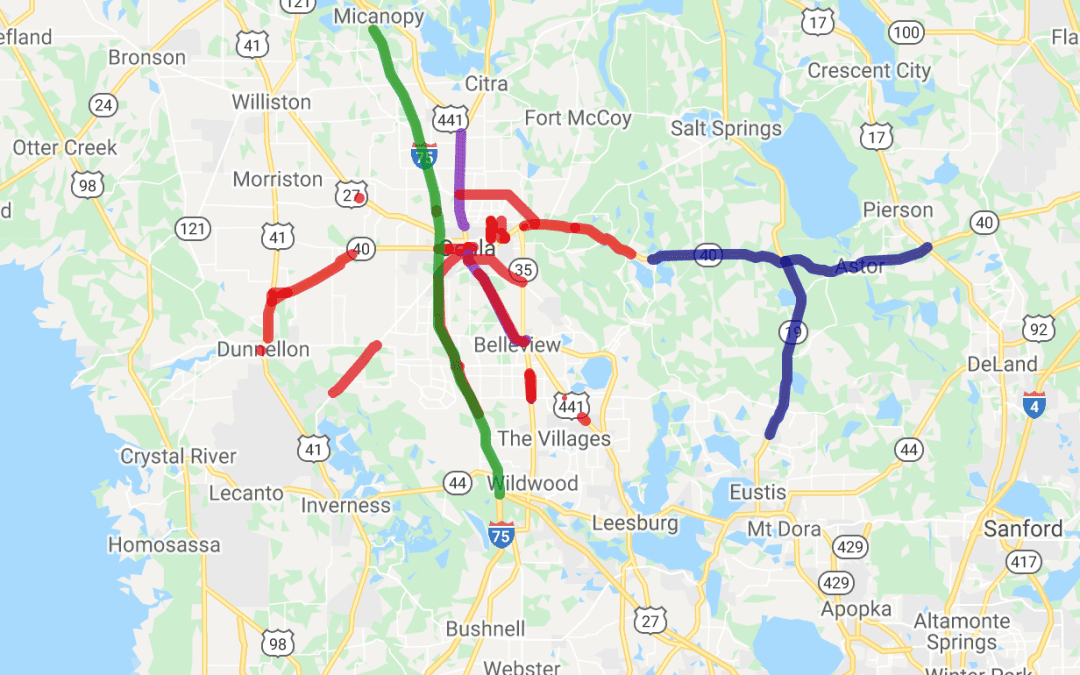
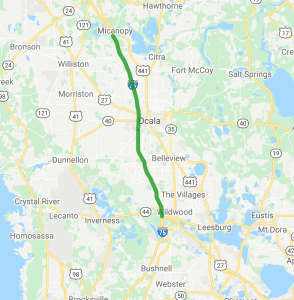
In 2021, FDOT decided to take a step back and refresh the Master Plan for I-75. The project starts in Sumter County at the northern terminus of Florida’s Turnpike in Wildwood and goes north for 47.8 miles to County Road (CR) 234 just north of Marion County. 


The Master Plan will only evaluate upgrading I-75 within the existing corridor. The project is divided into two sections for the purposes of the study.

Section 1 starts at the Florida Turnpike to 22.5 miles north to State Road (SR) 200.

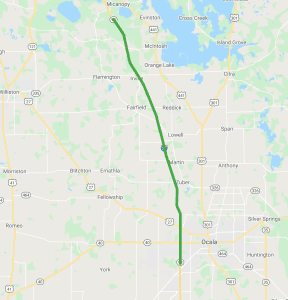
Section 2 starts at SR 200 in Marion County to 25.3 miles north to County Road (CR) 234 in Alachua County.

Timeline

The work on the I-75 Master Plan began in June, 2021. The draft  Master Plan report will be available sometime in June, 2022. A public meeting will be held in summer, 2022 for public comment and the final Master Plan report is due in November, 2022. The next phase is PD&E followed by Design and Construction. The FDOT Project Manager for the I-75 Master Plan is Mary McGehee. FDOT is also working with two consulting engineering firms, Volkert and HDR, Inc. to conduct the I-75 Master Plan study.

“The Master Plan will look at the short-term and the long-term solutions,” said Steven Schnell, an engineer with HDR, Inc. “The long-term solution looks out to 2050 and what needs to be done. This is such a long corridor and it will be implemented in phases to determine what is the best strategy and plan going forward.”

Some of the short-term solutions include enhanced ramps and better signals at some of the interchanges. The intersections at CR 236, SR 40 and SR 200 will also be improved.

“The biggest issues are at CR 326,” said McGehee. “That’s where the trucks are getting on and off of I-75. The two truck service centers at this intersection also adds to the congestion as the trucks intermingle with the cars.”

The long-term improvements will be included in the Master Plan study and potentially include adding two additional lanes and new interchanges. The goal is to improve the traffic flow and safety, and to further reduce the amount of time to clear traffic incidents. The variation in the traffic due to the holidays, weekends, inclement weather, incidents and the truck traffic will also be addressed in the report.

Ocala’s Strategic Location

FDOT has the Herculean task of planning for the future transportation needs for Marion County. The good news is that the majority of the road improvements are made within existing corridors.

Marion County is growing quickly and the roads must also grow. Ocala’s strategic location between several major cities and readily available land along I-75 is one of the reasons several large distribution centers have chosen Ocala for their relocation or expansion needs. For tourists and commuters, I-75 is also the most direct route to the Turnpike and to south Florida’s popular west coast.

42 Projects

There are currently 42 FDOT projects in Marion County that are at various stages. You can submit comments or ask a question about each project on the FDOT District Five website.

We’ll Be Watching

The improvement of I-75 is one of the most significant transportation issues facing the county. I-75 also runs through the Farmland Preservation Area, so we will be monitoring the I-75 Master Plan and attending the public meeting this summer. We thank the FDOT team for updating us about the road improvement project because it will have a tremendous impact on the quality of life in Marion County. FDOT has decades of institutional experience and their goal is to make I-75 better and safer for all travelers.


Already In The Design Phase

New I-75 Interchange at NW 49th Street/NW 35th Street

The Florida Department of Transportation (FDOT) is building the new interchange at NW 49th Street/NW 35th Street. According to the FDOT website, the Project Development and Environment (PD&E) Study was completed in March 2021 and the project is currently in the design phase. The FDOT Design Project Manager is Megan Owens and the Design Firm is Metric Engineering.

Construction is anticipated to begin in August of 2024. The cost of the project is approximately $41 million for construction. The estimated time frame for completion is 1 to 3 years.

Read our blog on this project

Link to the PD&E study and a comment form to send comments to FDOT.

Busy Shires

What About Zoning?

The Zoning regulations are found in the Land Development Code, which is a separate document with specific guidelines to implement the Goals, Objectives, and Policies of the Comprehensive Plan.

Zoning regulates development through land use classifications and specifies the areas in which residential, industrial, recreational or commercial activities may take place. The Land Development Code was adopted through a series of ordinances by the County Commission, which means that the regulations cannot be changed or waived, except by a further vote of the County Commission.

Always Watching

We work hard to keep you informed, and to represent our members' interests in preserving our horse farms, farmland and the unique character and culture of Marion County's 193,000 acre Farmland Preservation Area.

Join the herd. Every voice matters.

Update on the SW/NW 80th/70th Avenue Road Widening

Update on the SW/NW 80th/70th Avenue Road Widening

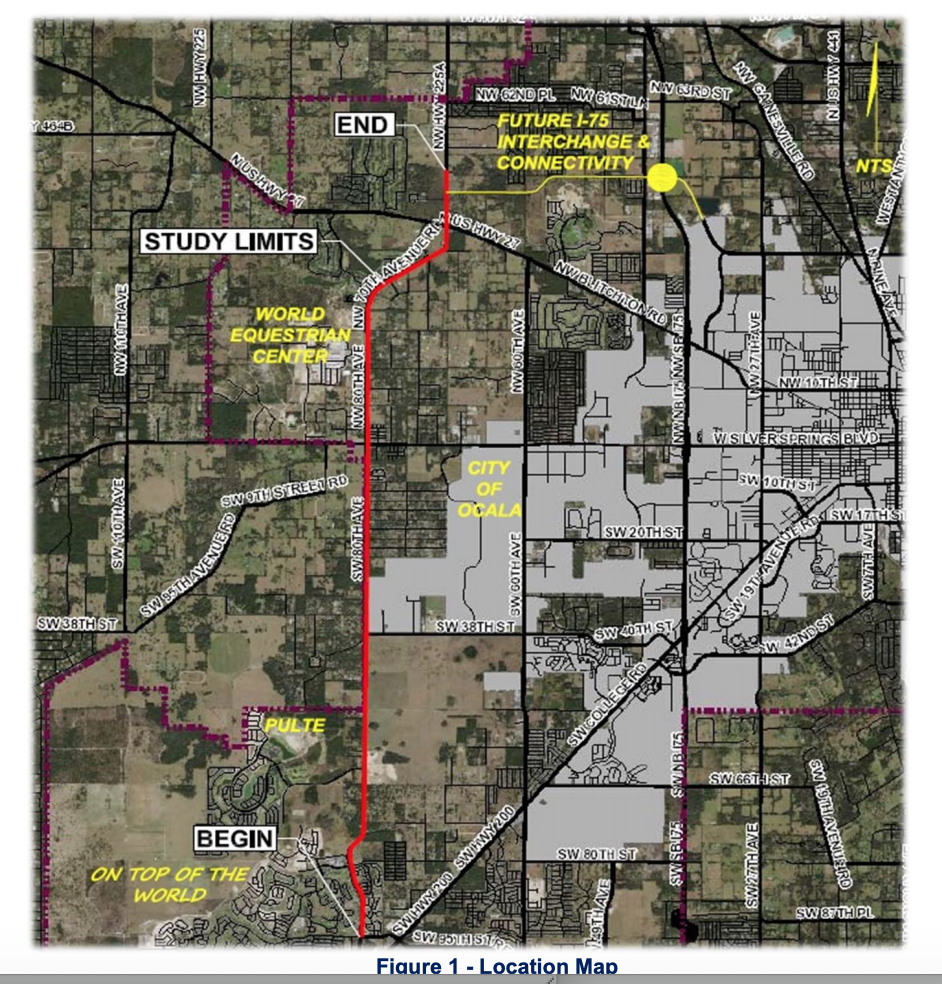
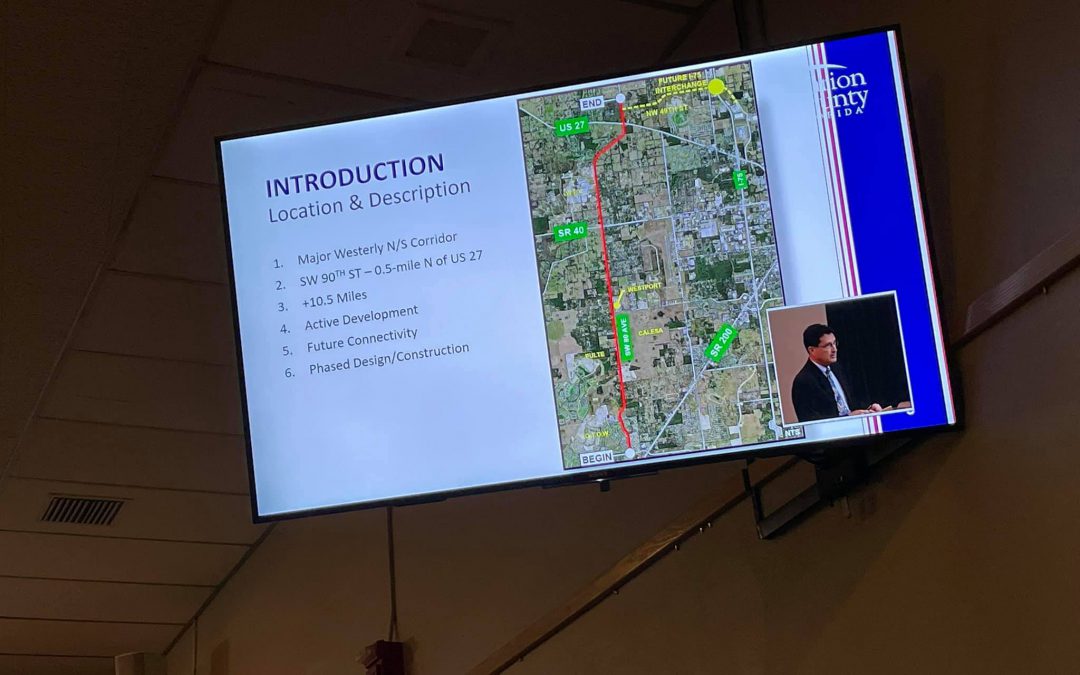
At the Marion County Commission Workshop on June 7th, Juan Guerra, Owner of Guerra Development Corporation, presented the Preliminary Engineering Report (P.E.R.) for SW/NW 80th/70th Avenue.

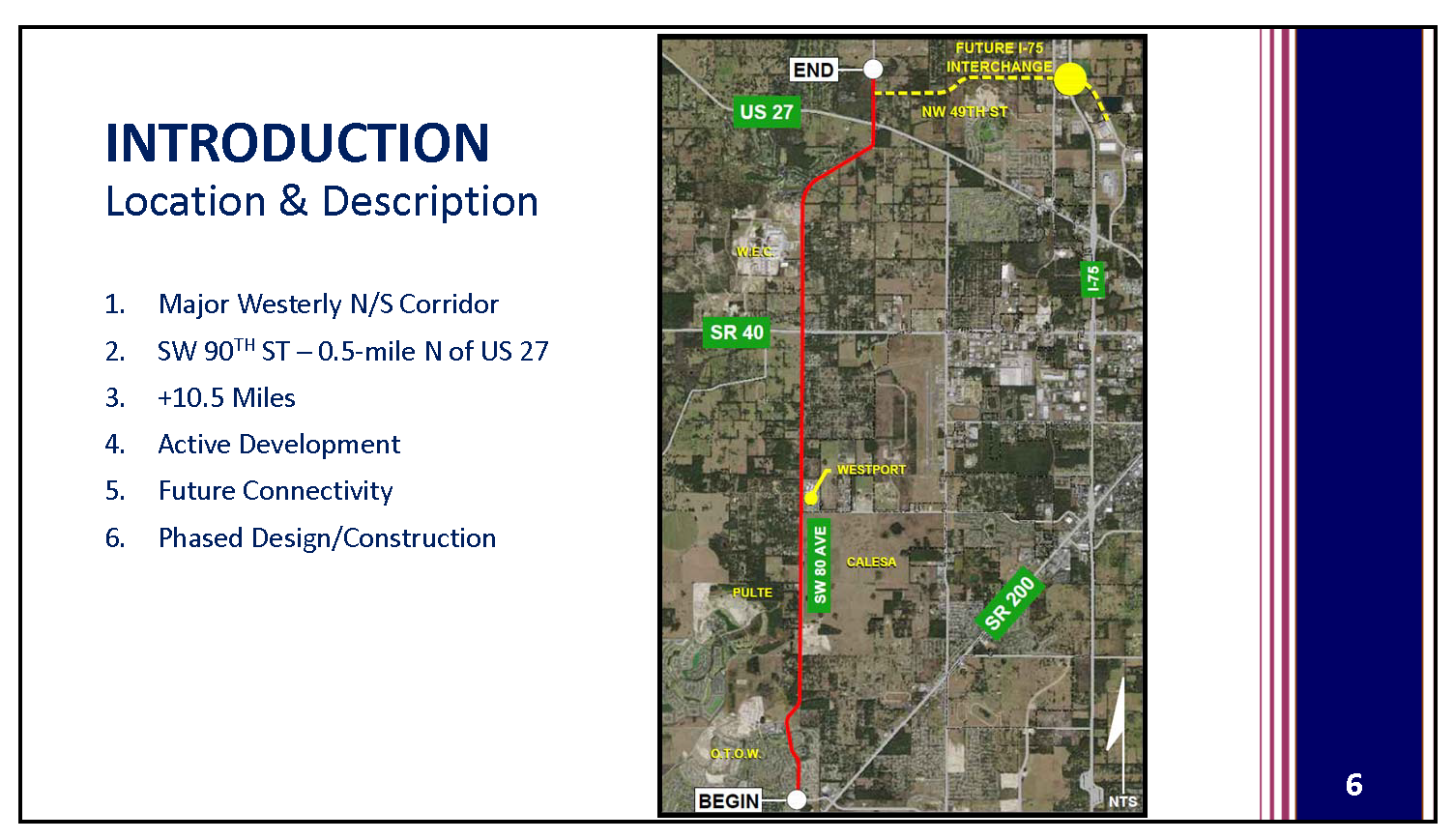
With the opening of the World Equestrian Center, and the new Calesa Township being built at On Top of the World Communities Ocala, the traffic on SW/NW 80th/70th Avenue will more than double. That’s an increase from about 14,600 to 37,500 vehicles per day. To accommodate this traffic and make it safer for cars, pedestrians and bicyclists, the road will be widened into a divided four-lane roadway with a median, sidewalks, bike paths and a separate multiuse asphalt path.

A Look at the Area

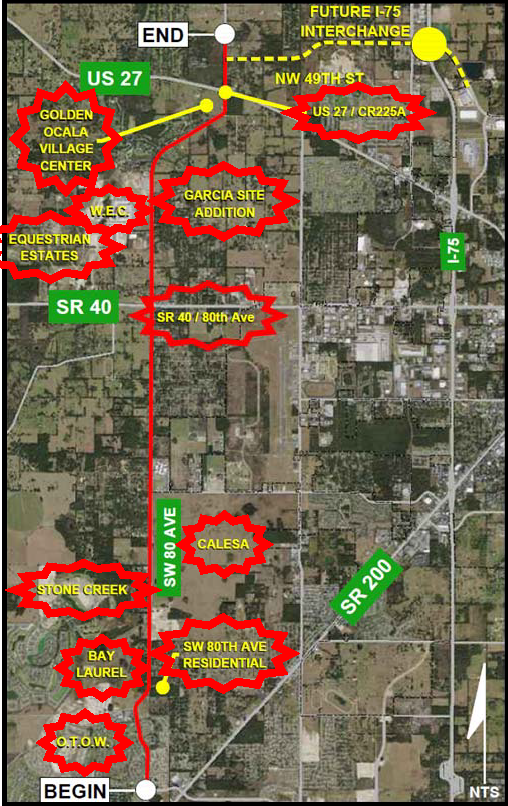
The road improvement project is 10.5 miles long and extends from just north of SR 200 to about one quarter to one half-mile north of US 27. Due to the existing businesses, houses, and Westport High School, the width and design of the road will be modified to accommodate the existing uses. Most of the road widening will occur on the west side of the existing road. At the widest point, the road and multiuse paths will be 120’. The multiuse paths vary from 10’ to 14’ wide and they also include a designated bike path. Other potential sections of the road will be 100’ with a 5’ sidewalk and 4’ bike lane next to the 12’ travel lane for cars. The designs presented were preliminary designs and the road will be approved after further input is received.

Three Phases – Ten Years

There are three main segments to the road construction project. It is estimated that it will take 10 years to complete. The intersections at US 27 and SR 40 will be the first segments to be completed. There is a preconstruction meeting for the intersection at US 27 that will be held sometime this month.

The Workshop was an opportunity to receive feedback from the Commissioners about the road improvements. Several Commissioners expressed concerns about saving the tree canopy and the legacy trees. Mr. Guerra said that every effort would be made to save as many trees as possible and to protect the character of the road. The multiuse path will be “meandered” to make the path more appealing and to help save the trees.

Because it was a Commission Workshop, there were no public comments. However, a community meeting will be scheduled soon for the public to provide input and comments. Keep an eye on the Calendar for updates.

Send comments to: roads@marionfl.org
For more information, contact Pat Russett at 352-671-8686.

Busy Shires

What About Zoning?

The Zoning regulations are found in the Land Development Code, which is a separate document with specific guidelines to implement the Goals, Objectives, and Policies of the Comprehensive Plan.

Zoning regulates development through land use classifications and specifies the areas in which residential, industrial, recreational or commercial activities may take place. The Land Development Code was adopted through a series of ordinances by the County Commission, which means that the regulations cannot be changed or waived, except by a further vote of the County Commission.

Engineering Report

The full report is available on Marion County’s website. To go there, click on the image or the button below:

Always Watching

We work hard to keep you informed, and to represent our members' interests in preserving our horse farms, farmland and the unique character and culture of Marion County's 193,000 acre Farmland Preservation Area.

Join the herd. Every voice matters.